
 admin
Staking Pins in SMT Circuit Boards
Printed circuit boards (PCBs) are essential in the production of electronics and telecommunication systems. They are vital for ensuring the safety and functionality of such devices, thereby making them indispensable components in a wide range of applications. The design and manufacturing of PCBs has shifted away from through-hole technology towards surface mount technology (SMT). This is mainly because of the call for miniaturization, higher speed, and lower cost. The development of equipment that can reliably place SMT components at high speeds has fueled this shift in PCB design and manufacture.
SMT offers several advantages over through-hole technology, including a smaller package size, which allows for increased component density, and lower lead induction, which reduces electromagnetic compatibility (EMC) concerns. These benefits also result in shorter signal paths, which can enhance the performance of a device’s circuitry. In addition, the reflow soldering process used for SMT is more energy-efficient and environmentally friendly compared to wave soldering.
However, one of the disadvantages of SMT is that it can sometimes create weak solder connections. These connections are susceptible to vibration, which can cause a loss of stability in the electronic device’s operation. Staking pins can help mitigate this problem by providing a mechanical reinforcement that strengthens the solder connection.
The staking pin’s design allows it to be inserted into a smt circuit board with minimal force. Its flanged tip prevents the pin from bending during insertion, which can result in a poor solder joint. Staking pins are also available in different shapes and sizes to accommodate a variety of PCB types and sizes.
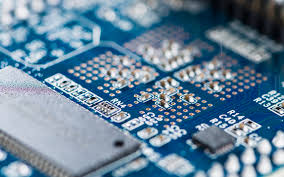
Benefits of Staking Pins in SMT Circuit Boards
Another benefit of staking pins is that they can be easily positioned by machine for faster assembly. This can lead to a more efficient manufacturing process that lowers costs and increases productivity. They are also compatible with most surface-mount manufacturing processes. This is a crucial feature for companies that require consistent assembly and low production cycle times.
Staking pins are also a viable solution for enhancing the strength of SMT connections. These connectors are designed to withstand the effects of vibration and shock. In some cases, the vibration and shock can exceed the strength of a standard solder connection. In these situations, staking pins are the ideal solution.
Besides preventing vibration and shock, staking pins can also be used to protect components from moisture. In addition, they can be used to connect wires to a PCB. This will provide a secure and reliable connection for wires of different lengths.
Staking pins can be purchased in tape and reel or in trays. They can be deposited using an automatic placement system or a manual system that uses a vacuum pickup or gripper to pick up and place the component on the PCB. Alternatively, they can be placed in a holder that will hold the pin during the assembly process. Once the staking pin has been placed, it can be sealed with HumiSeal, which ensures a long-lasting, robust connection for the life of the electronic device.

