
 admin
Flexible Printed Circuits
Flexible displays are a combination of novel materials and innovative production techniques that have the potential to transform how we use our electronic devices. Unlike traditional LCD and OLED displays that utilize glass to produce images, flexible display screens are made of organic compounds that can be printed onto a substrate. This allows them to follow edges, curves and the shape of their host device, resulting in a more immersive experience for users.
However, the technology needed to create such displays is still evolving. In order for flexible printed circuit displays to become more mainstream, they will need to be able to withstand multiple bending cycles without showing signs of degradation or loss of functionality. This will require a hybrid of new material compositions and design innovations, such as thinner films and a more robust display structure.
One of the most important challenges is overcoming the limitations of current thin-film transistors (TFT). TFTs are an integral component of most modern electronic devices, and they are unable to handle high amounts of bending strain. To help address this issue, researchers are developing a series of materials that can be used to create TFTs with increased elasticity.
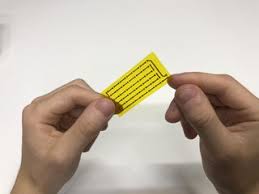
Flexible Printed Circuits for Flexible Displays
The most promising candidate is a polymer called polyethylene naphthalene (PEN). It has excellent elasticity, mechanical strength and heat resistance. However, it must be combined with other materials to improve performance, including an anti-static agent, conductive inks and insulators. This is why researchers have developed a multi-layer PEN-based FPC, which features insulators and TFTs arranged on separate layers.
Using an advanced computer simulation model, researchers have conducted various tests to determine the reliability of this new type of FPC. These include ball drop and three-point bending, both under static and dynamic load conditions. They have also compared the maximum von Mises stresses for different FPC configurations, and have provided design suggestions based on this analysis.
Another challenge is determining how much stress will be exerted on a flexible display when it is rolled up and spread out, as well as how this stress will affect its performance. To help prevent damage to the display, manufacturers are developing methods for distributing this stress. One such technique is to use an insulator that absorbs shock and vibration. In addition, they are implementing a “filleting” technique to divide stress and increase pad surface area.
Finally, it’s critical to find an ideal manufacturing process for flexible display fabrication. This will be crucial for enabling mass production of the technology and bringing it to market. Currently, the most common approach is screen printing a layer of conductive material on a flexible polyester substrate. While this is a cost-effective solution, it is limited by the amount of layering and scale that can be achieved with it. In order to overcome these limitations, researchers have been working on a process known as gravure printing, which uses low-viscosity inks to transfer an image from a copper-coated steel cylinder to a flat surface. Once the image is transferred, it can be laminated to a variety of substrates, including polyimide and PEN.

