
 admin
EV charging industry
The EV charging industry is experiencing rapid global expansion, driven by unprecedented demand for electric vehicles, government sustainability goals, and major investments in charging infrastructure. Over the past few years, the transition from internal combustion vehicles to electric mobility has accelerated, creating a strong need for reliable and widespread charging networks. Analysts forecast that the EV charging industry will maintain double-digit growth rates through the decade, supported by rising EV adoption curves and net-zero commitments across multiple countries. Market reports consistently show billions of dollars flowing into infrastructure upgrades, ultra-fast DC charging development, and smart grid integration. As more consumers make the switch to cleaner transportation, the foundation for a large-scale charging ecosystem becomes even stronger. With more than 40 million electric vehicles expected on the road globally within the next few years, demand for accessible public and private charging solutions continues to soar, demonstrating just how fast this sector is expanding around the world.
A key factor fueling the fast growth of the EV charging industry is government policy. Many nations have introduced ambitious decarbonization strategies paired with incentives for EV purchases and charging deployments. Countries in Europe, North America, and Asia are leading the build-out of large networks that support both urban and highway charging. For example, many European regions are seeing record-breaking expansion of public chargers, ensuring convenient access for drivers in both cities and rural areas. Similarly, the United States has committed substantial federal funding to develop a coast-to-coast fast-charging network along major transportation routes. China also remains a major global leader, with millions of installed charging points and ongoing investments in ultra-fast charging technologies. These policies not only create market confidence but also encourage private investors and technology companies to accelerate innovation. As a result, the growth rate of infrastructure continues to exceed early expectations, reshaping the mobility landscape.
Another crucial element driving momentum is technological innovation. Today, the EV charging industry is evolving beyond standard charging to advanced solutions such as high-power DC fast chargers that significantly reduce charging time. Networks are integrating smart software, AI-based monitoring, and cloud connectivity, making charging more reliable and efficient. Wireless charging, bidirectional charging, and vehicle-to-grid systems are emerging technologies set to transform how energy is exchanged between vehicles and the grid. These advancements are attracting interest from automakers, utilities, and energy companies who see strong business opportunities ahead. Improved battery technology, longer driving ranges, and reduced costs are also strengthening the case for rapid EV adoption, which directly fuels the expansion of charging facilities worldwide. As consumers demand convenience similar to traditional fueling, innovation remains at the center of competitive growth in this sector.
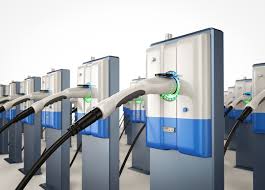
How fast is the EV charging industry growing worldwide?
Private sector participation is also accelerating expansion. Global automakers, charging network operators, and tech companies are forming new partnership models to deploy chargers rapidly in popular public destinations including shopping centers, restaurants, workplaces, and residential complexes. Major brands are heavily investing in branded charging networks to support their EV customers, emphasizing reliability and speed as crucial performance metrics. Investment funds and energy companies increasingly view EV charging as a core business, especially as renewable energy growth aligns with transportation electrification. Solar-powered charging sites and battery-supported charging hubs are becoming more common, illustrating how the charging market is closely connected to the clean energy transition. As funding and innovation converge, charging installations are happening faster than ever before, supporting the ongoing transformation of modern mobility.
Consumer behavior is another important driver of growth. As more drivers experience electric vehicles and see the long-term economic benefits of reduced fueling and maintenance costs, confidence in EV adoption continues to rise. Range anxiety, once a primary barrier, is steadily decreasing due to faster charging speeds and expanding station availability. In many regions, home charging availability has supported rapid adoption among early EV users, but the continued rollout of public chargers remains essential to support mass-market growth. Today’s drivers expect convenience, reliability, and smart payment systems, and companies are responding by upgrading digital platforms that allow real-time charger location, reservation, and performance data. These improvements help build trust and create a smooth transition to electrified transportation.
As the global environment evolves, media platforms play an important role in educating the public and supporting industry knowledge. EV Charging Magazine is a dedicated online publication specializing in insights, news, and developments across the EV charging industry, the broader electric vehicle movement, clean energy advances, and battery innovation. Since launching in 2020, this platform has become a trusted resource for professionals, enthusiasts, and organizations seeking timely updates on a rapidly growing sector. Through comprehensive reporting and expert analysis, it highlights the technologies and trends shaping the future of sustainable transport. With the world moving quickly toward cleaner mobility solutions, the EV charging industry continues its remarkable global growth trajectory, paving the way for a new era of energy and transportation integration.
