 admin
admin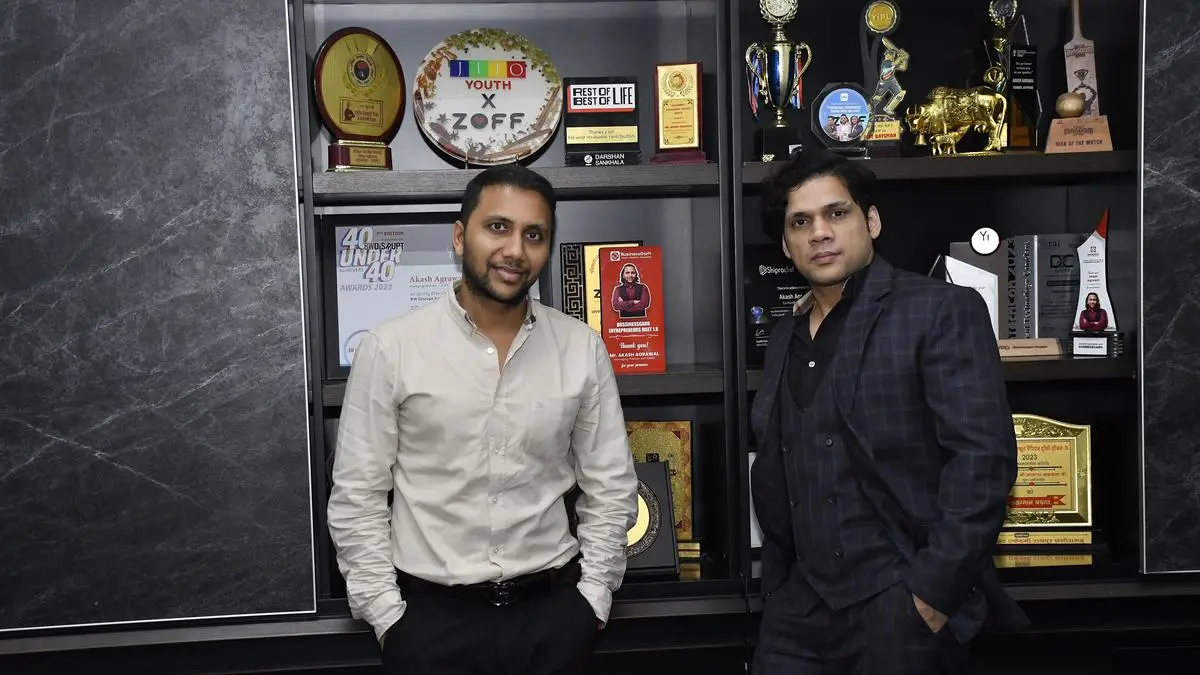
If there is one thing in the kitchen that Indians are very particular about, it’s the spices they use. And the choice of spice brand is most often dictated by regional preferences, with each State having its entrenched local leader.
There are only a handful of national brands, and it has taken decades for an Everest or MDH or Catch to become one. The nearly ₹87,000 crore spices market has over 1,460 registered companies (Traxcn data) and thousands of unorganised players.
Video Credit: Businessline
Most consumers are fiercely loyal to the spice brand they use. The category has seen 54 acquisitions, 17 IPOs, and attracted venture capital and private equity funding of over $6.4 billion.
And yet, here comes a young D2C player from the steel belt of Raipur, set up by two brothers, Akash and Ashish Agrawalla, with a burning ambition of becoming a big national spice brand. “In five years’ time, our goal is that at least one of our products should be in every Indian kitchen,” declares Akash, co-founder, ZOFF. The name ZOFF is an acronym for Zone of Fresh Foods.
Already the brothers have discovered the sweet spot in the spice segment. That is in ‘khada masala’ or whole spices. Most brands, they say, play in the powders and blended spices space, where the margins are higher.
“We saw the big gap in the market in whole spices. We don’t want to compete with Everest or MDH in their niche, instead we want to be identified as the best brand for whole spices,” Akash says.
To strengthen that positioning, ZOFF has launched a series of rib-tickling campaigns, starring Shilpa Shetty, that end with the tag line “Khadey masala matlab ZOFF”.
Aroma of opportunity
Ashish says that once ZOFF gets its foot in the door of an Indian home through whole spices, the bet is the customer will try out their other products too. And with that eventuality in mind, ZOFF has spread itself wide through the category. Spices are of four types — powders (turmeric, coriander, cumin, chilli being the most essential), blended (garam masala, pav bhaji masala, sabzi masala, et al), whole spices and seasoning (oregano, parsley, among others), explains Akash. “We are in all four.”
Within blends, the brothers say, there is no limit, and this is where regional brands score — you might choose a northern brand for rajma masala, a southern one for sambar masala, and region-specific ones like vangi bhaat masala, rasam powder, and so on.
A tour of ZOFF’s sprawling factory shows the use of modern technology such as cool grinding processes to retain more oils in the spices, fascinating product extensions, and packaging innovation. For instance, there is ‘haldamrit’, a turmeric powder with spices to be mixed with warm milk — a traditional remedy for cold and cough.
Disruptive ziplock pouches have been introduced, so there is no need to transfer the spices to bottles. But most interesting of all are the tiny sachets for some products. The brothers have also ventured into the dry fruits, nuts, seeds, marinades and ready-to-cook mix segments.
Set up in 2018, and gathering pace around 2021, ZOFF is already touching a revenue of ₹200 crore and eyeing a turnover of ₹300 crore by next year — the robust 100 per cent growth coming through more products, big distribution ramp-up and marketing.
Calculated entry
The Agrawalla brothers’ entry into the spices segment was well-calculated. Hailing from a well-off family that was in a steel-related business and agri trading, the brothers did their MBA in Australia and were clear they wanted to do something else. According to Ashish, what tempted them into spices was the margins, the gap they spotted, and the fact that there were very few big national brands.
Born online — Flipkart Grocery was their first distribution channel — today over 80 per cent of ZOFF’s turnover is from digital platforms. “While we got huge learnings from Flipkart Grocery, it was CRED store that helped us achieve entry into 5 lakh homes,” says Ashish. The brand is present on all six quick commerce platforms. But now, it is ramping up its offline play. Partnerships with D-Mart and Reliance Smart Bazaar have been sewn.
Why operate from Raipur, which has no connection with spices? The brothers insist that Raipur actually works wonderfully to their advantage. The cost of setting up the office and factory (with a lot of space and capacity to expand) was much lower. Moreover, being in central India, in a well-connected industrial town, the transportation — both for sourcing and despatch — was much cheaper and more efficient. Their dad, incidentally, does all the sourcing of spices, having experience in agri trading.
The brothers, who came into the limelight after a Shark Tank appearance that won them some funding from boAt’s Aman Gupta, are very marketing savvy. So far the major spends have been on performance marketing, with the brand-building journey beginning only now. It has got Series A funding from JM Financials and is using that to scale up.
Since spice was a completely new business for them, did they have any mentors? “Time has been the biggest mentor,” responds Akash, describing how the Covid years were spent in learning and strategising.
(The writer was in Raipur at the invitation of ZOFF)
More Like This
Published on July 28, 2025
